Community Support vs. Recruitment in MLM
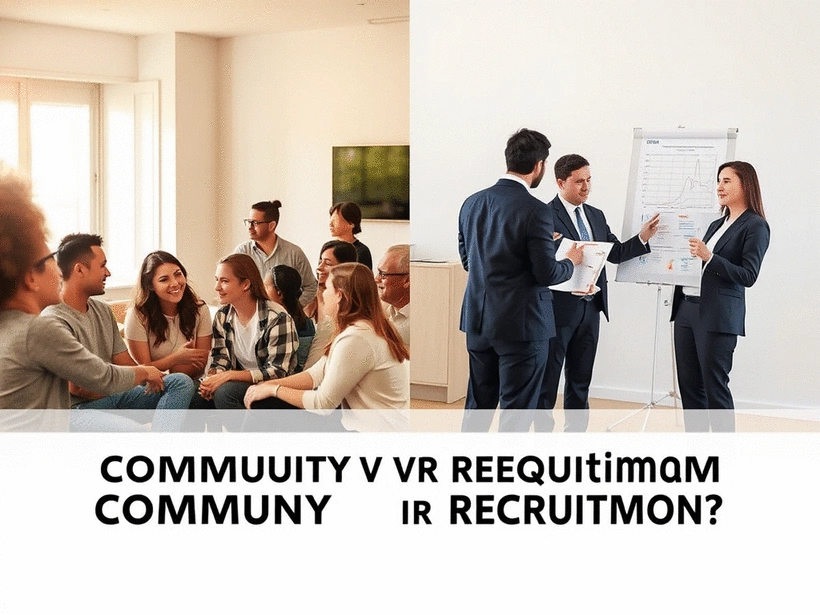
What if the path to success in network marketing lies not in recruitment numbers, but in building lasting relationships? Understanding the dynamics between different MLM strategies can transform your approach and set you on a sustainable path towards growth.
What You Will Learn
- The essential differences between MLM and network marketing, focusing on income generation methods.
- The impact of recruitment on income potential and team dynamics within MLM structures.
- How direct selling enhances customer relationships and fosters loyalty in MLM.
- The significance of choosing between community-focused and recruitment-heavy MLM strategies for long-term success.
MLM Strategy Comparison: Community-Focused vs. Recruitment-Heavy
This visual highlights the key distinctions between two primary approaches in Multi-Level Marketing, focusing on their impact on participant engagement, sustainability, and ethical considerations.
Approach Overview
Community-Focused MLM
Emphasizes relationships & long-term satisfaction
Recruitment-Heavy MLM
Prioritizes rapid sign-ups & recruitment numbers
Key Focus
Community-Focused
- Customer satisfaction
- Retention & loyalty
- Long-term relationships
Recruitment-Heavy
- Rapid sign-ups
- Expanding downline
- Quantity over quality
Implications & Risks
Community-Focused
- Sustainable growth
- Enhanced brand loyalty
- Lower turnover
Recruitment-Heavy
- High turnover rates
- Ethical concerns (pyramid schemes)
- Income disparities
Understanding the Core Differences in MLM Strategies
Defining MLM and Network Marketing Concepts
When diving into the realm of multi-level marketing (MLM) and network marketing, it’s essential to grasp the fundamental concepts that underpin these models. At its core, MLM is a strategy where individuals earn income through both direct sales of products and by recruiting others into the business. This creates a cascading structure, allowing marketers to benefit from their recruits' sales, forming a “downline.” On the other hand, network marketing emphasizes building relationships and a network of distributors who work together to promote and sell products, often without the hierarchical structure seen in traditional MLM. The Federal Trade Commission (FTC) provides extensive guidance on understanding these business practices, differentiating legitimate MLMs from pyramid schemes, which are illegal.
Understanding these distinctions helps clarify how each approach operates. While both models focus on relationship-building and personal connections, their methods of generating income and sustaining growth can differ significantly. By recognizing these key differences early on, you can better navigate your journey in the network marketing world and align your strategies with your goals.
The Role of Recruitment in MLM: An Overview
Recruitment is a cornerstone of the MLM model, significantly impacting its structure and effectiveness. In MLM, individuals recruit new members to expand their downline, enabling them to earn commissions on sales made by their recruits. This recruitment-heavy approach can sometimes lead to challenges, such as a focus on quantity over quality in building teams. It's essential to understand how recruitment not only influences income but also shapes the overall culture within the organization. Some research, like the study on the psychology of network marketing by Wiley Online Library, delves into the psychological aspects that drive recruitment and participation in MLMs.
- Income Potential: The more people you recruit, the higher your potential earnings.
- Team Dynamics: A strong focus on recruitment can lead to competition over collaboration.
- Sustainability Risks: Recruitment-heavy focuses may lead to high turnover and ethical considerations.
As you explore MLM strategies, consider how recruitment practices align with your values and the long-term vision for your business. This understanding can guide your decisions as you build your network and develop your unique approach.
Exploring Direct Selling within MLM Frameworks
Direct selling plays a vital role within the MLM framework, merging the personal touch of face-to-face engagement with the scalability of network marketing. In this model, distributors sell products directly to consumers, often leveraging their personal networks to generate sales. This relationship-based selling can enhance customer engagement and foster loyalty, creating a more sustainable business environment.
- Personal Connections: Building relationships boosts customer trust and satisfaction.
- Product Education: Direct sellers can provide personalized product knowledge, enhancing the buying experience.
- Customer Retention: Engaged customers are more likely to return for repeat purchases.
By integrating direct selling into your MLM strategy, you not only drive revenue but also cultivate lasting relationships that can be the foundation of your business growth. As someone who's passionate about empowering marketers, I've seen firsthand how strong customer connections can lead to lasting success in network marketing. A helpful resource from ACFE.com further clarifies the distinctions between legitimate MLMs and fraudulent pyramid schemes, emphasizing the importance of genuine product sales.
Frequently Asked Questions About MLM Strategies
What is the main difference between community-focused and recruitment-heavy MLM strategies?
Community-focused MLM strategies prioritize building long-term relationships, customer satisfaction, and loyalty, aiming for sustainable growth. In contrast, recruitment-heavy strategies emphasize rapid sign-ups and expanding the downline, which can sometimes lead to high turnover and ethical concerns.
How does recruitment impact income potential in MLM?
In recruitment-heavy MLM models, your income potential can significantly increase with the number of people you recruit into your downline, as you earn commissions on their sales. However, this can also lead to a focus on quantity over quality in team building.
What role does direct selling play in MLM?
Direct selling is crucial in MLM as it involves distributors selling products directly to consumers. This approach helps build personal connections, enhances customer trust through product education, and fosters loyalty, which is essential for customer retention and sustainable business growth.
What are the potential risks of a recruitment-heavy MLM strategy?
Recruitment-heavy MLM strategies can lead to high turnover rates, potential ethical concerns (including allegations of pyramid schemes), and significant income disparities among participants. The focus might shift from genuine product sales to recruitment for profit.
How can I choose the right MLM approach for my business?
Choosing the right MLM approach involves reflecting on your personal values and business goals. Consider whether you are more passionate about building a supportive community and nurturing long-term relationships or if you are driven by the fast-paced nature of recruitment. Engaging with your network and gathering insights from experts can also help inform your decision.
We Want to Hear From You!
As you reflect on your approach to MLM strategies, what resonates more with you? Are you leaning towards building a supportive community or focusing on recruitment numbers? Share your thoughts below:
Summarizing Key Takeaways from MLM Strategies
As we dive into the heart of MLM strategies, it becomes clear that there are critical distinctions between community-focused and recruitment-heavy approaches. Each strategy has its unique implications for participants and leaders alike. By understanding these differences, we can better navigate our paths in the network marketing world.
Community-focused MLM strategies emphasize relationships and long-term satisfaction over mere recruitment numbers. This approach tends to foster loyalty among customers and team members, leading to sustainable growth. On the other hand, recruitment-heavy strategies prioritize quick sign-ups, which can often lead to high turnover rates and ethical concerns. For a deeper understanding of the legal landscape and potential pitfalls, a PDF from Georgetown Law offers insights into how MLMs can target specific populations and the implications of such practices.
- Community-Focused MLM: Prioritizes customer satisfaction, retention, and long-term relationships.
- Recruitment-Heavy MLM: Focuses on rapid sign-ups, often at the expense of community health.
- Ethical Concerns: Recruitment-heavy models may lead to pyramid scheme allegations and income disparities.
- Long-Term Impacts: Community engagement can enhance brand loyalty and participant investment.
So, which approach resonates more with you? Are you drawn to building a supportive community that thrives on engagement and mutual success, or are you focused on the fast-paced nature of recruitment? Understanding these takeaways can guide your decisions as you navigate your network marketing journey!
Next Steps: Choosing the Right MLM Approach for You
Now that we've explored the core differences in MLM strategies, it's time to reflect on your personal values and business goals. Are you passionate about creating a strong community around your brand, or do you find excitement in driving recruitment numbers? At MLM Monthly, we believe that your approach should align with what feels right for you.
As you consider your next steps, I encourage you to explore your thoughts on community-building versus recruitment-focused strategies. Engaging with others in the field can provide valuable insights and inspiration. Have you seen success stories or testimonials that resonate with your vision? Don't hesitate to share your experiences with us or seek further information!
- Reflect on your values: Do they align more with community development or recruitment?
- Engage with your network: What strategies have your peers found most effective?
- Gather insights: Look for testimonials and expert advice that can inform your decision.
Remember, every journey in network marketing is unique. Embrace the path that feels authentic to you, and keep striving for success!
Recap of Key Points
Here is a quick recap of the important points discussed in the article:
- Understanding MLM: MLM involves earning income through direct sales and recruitment, while network marketing focuses on building relationships without a strict hierarchy.
- Importance of Recruitment: Recruitment is crucial in MLM, affecting income potential, team dynamics, and sustainability. Ethical considerations are vital in recruitment practices.
- Direct Selling Benefits: Direct selling enhances customer engagement and loyalty through personal connections and product education.
- Community vs. Recruitment Focus: Community-focused strategies prioritize long-term relationships and customer satisfaction, while recruitment-heavy strategies may lead to high turnover and ethical concerns.
- Next Steps: Reflect on your values, engage with your network, and gather insights to choose the right MLM approach that aligns with your business goals.